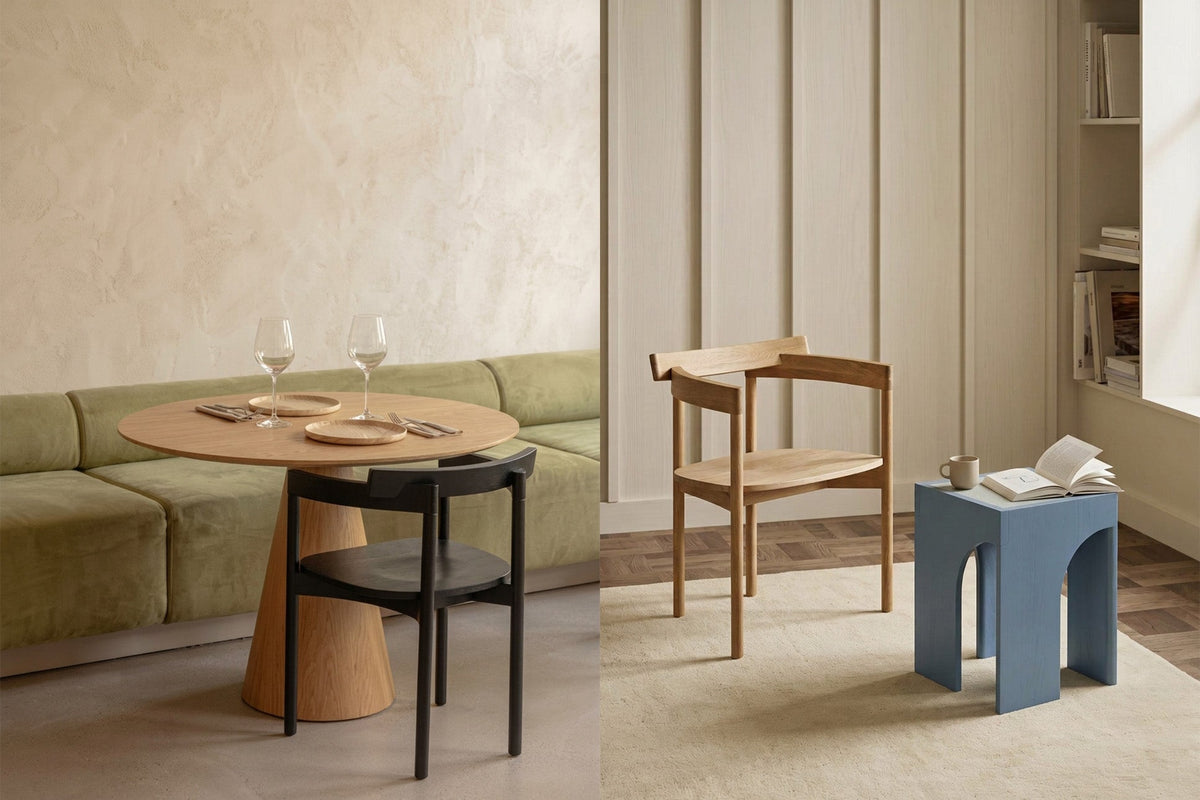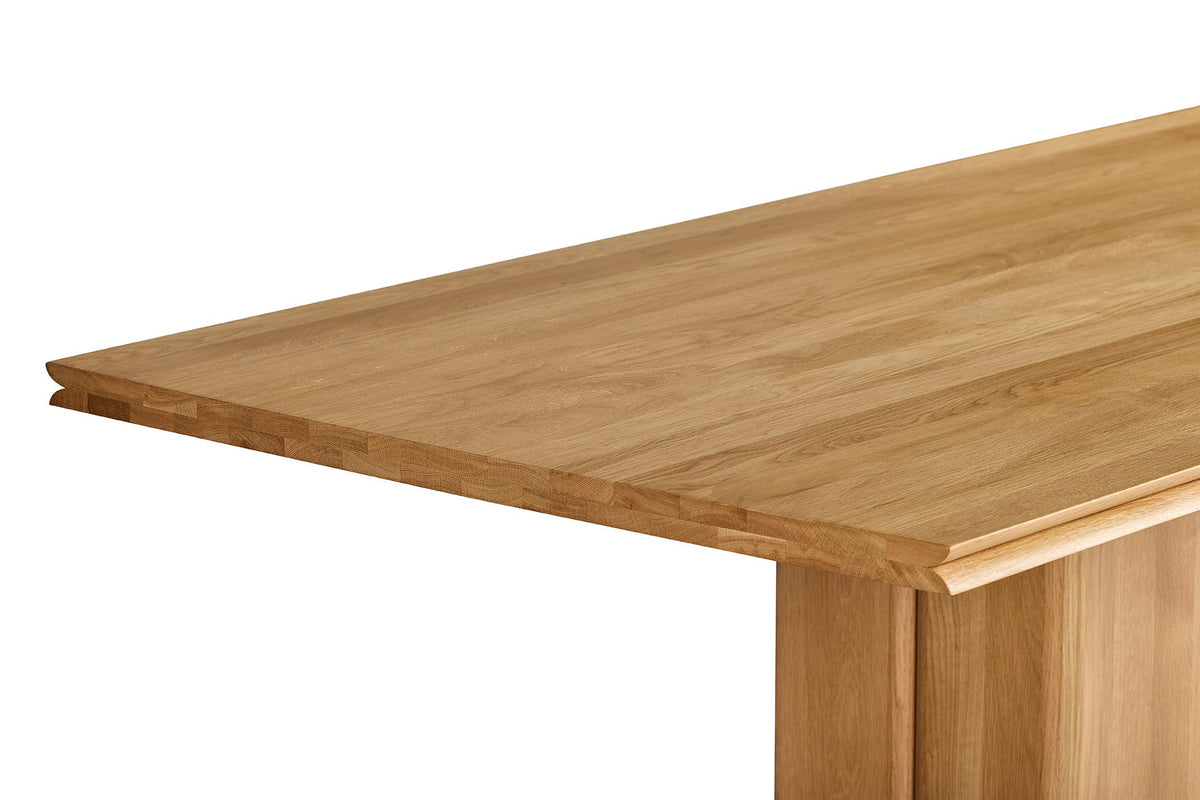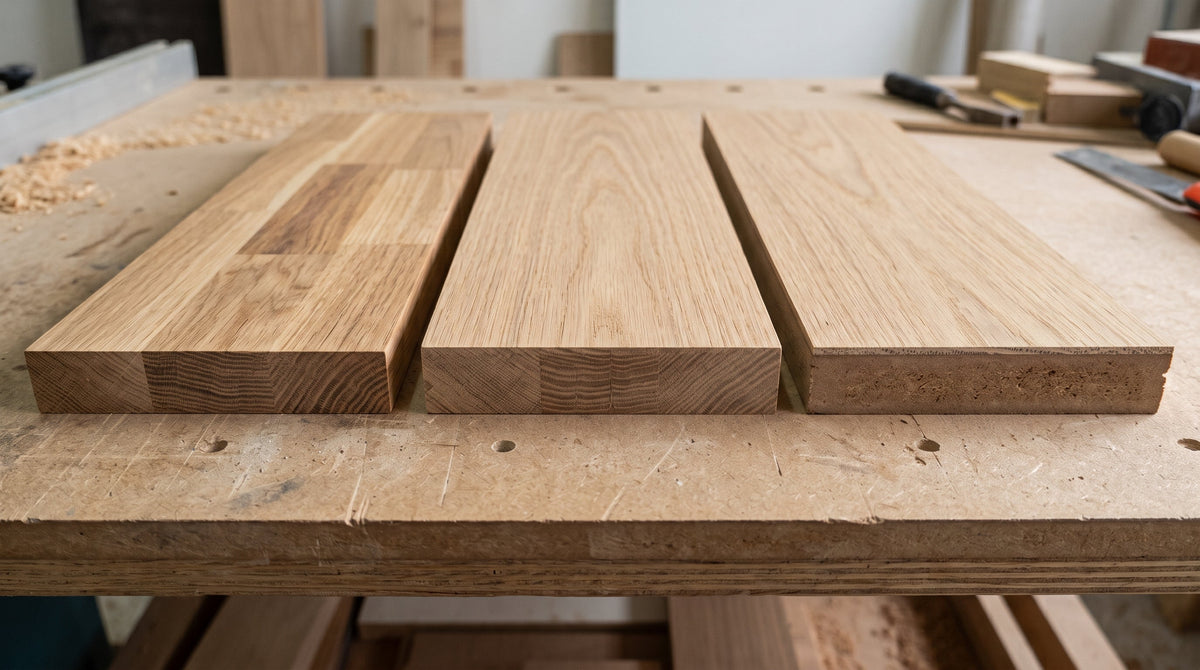
Solid wood, natural wood veneer, and MDF are different material and construction options used in furniture. In solid wood, the component in question is made of the wood itself. With natural veneer, a thin layer of real wood is applied to a substrate. MDF, on the other hand, is a board made from wood fibers; it can be painted, faced with natural wood veneer, or covered with a decorative surface. For this reason, “natural veneer” and “MDF” are not mutually exclusive terms.
A piece of furniture’s appearance alone does not reveal how it was made. Two tables in similar oak tones may be made from different materials. A sound comparison begins with finding out what lies beneath the surface.
What does solid wood mean?
A solid wood tabletop can be made from a single wide piece or produced by joining several pieces of wood together. Being joined does not make it a veneer or MDF. The distinction here is between a top made of solid wood pieces and a thin layer of wood applied over another substrate material.
When purchasing, ask which components the term “solid wood furniture” covers. A table with solid wood legs may have a veneered top. Having material information provided separately for parts such as the top, body, legs, and doors helps you evaluate the product more accurately.
Is natural wood veneer real wood?
Yes. Natural wood veneer is obtained from real wood and retains its natural grain structure. However, the substrate material beneath the veneer is different. “Oak veneer” and “solid oak” do not describe the same construction.
It is inaccurate to regard veneer as a merely cosmetic or low-value option. Choosing veneer for a cabinet door or a large surface can be a conscious design decision. What matters is that the material is clearly specified and that the construction suits its intended use.
Are MDF and melamine-faced MDF the same thing?
MDF is a substrate board. In products sold on the market as melamine-faced MDF (known in Türkiye as “MDF lam”), this board is generally covered with a melamine-based decorative surface. A wood-look decor is not the same as real wood veneer. Natural oak veneer on MDF, however, features a real wood top layer.
| Feature | Solid Wood | Veneered Panel | Melamine-Faced MDF |
| Construction | A single piece of wood or joined wood pieces | Thin real wood on a substrate | Decorative surface on MDF |
| Wood Appearance | The wood’s natural grain | The grain of the real wood veneer | Decorative printed pattern |
| What to Inspect | Wood species and piece construction | Veneer type and substrate material | Board and surface properties |
What should you look at when assessing price?
Material is one of the factors that determine price. Design development, component geometry, joinery, surface finishing, and craftsmanship should also be included in the comparison. Assuming two products are equivalent based solely on the phrase “wood-look” can be misleading.
When evaluating a product, three questions offer a good starting point:
-
Which part is made of which material?
-
What care does it require in everyday use?
-
What options are available if it needs repair in the future?
These questions tell you more than the price tag.
Related Questions
-
Is a joined solid wood top of lower quality?
The presence of joints does not in itself indicate lower quality. How the pieces were prepared and how the joinery was executed must also be examined.
-
Is solid wood always the right choice?
The choice depends on functional needs and design. Look at the product as a whole rather than focusing solely on the material name.
-
Is it enough for a piece of furniture to be oak-colored?
No. “Oak” describes a wood species, whereas “oak-colored” may describe only an appearance. Look for the material specification itself in the product description.
When browsing the Förni collection, evaluate the material specifications of each product together: compare the wood species, the parts where it is used, and the finish options.