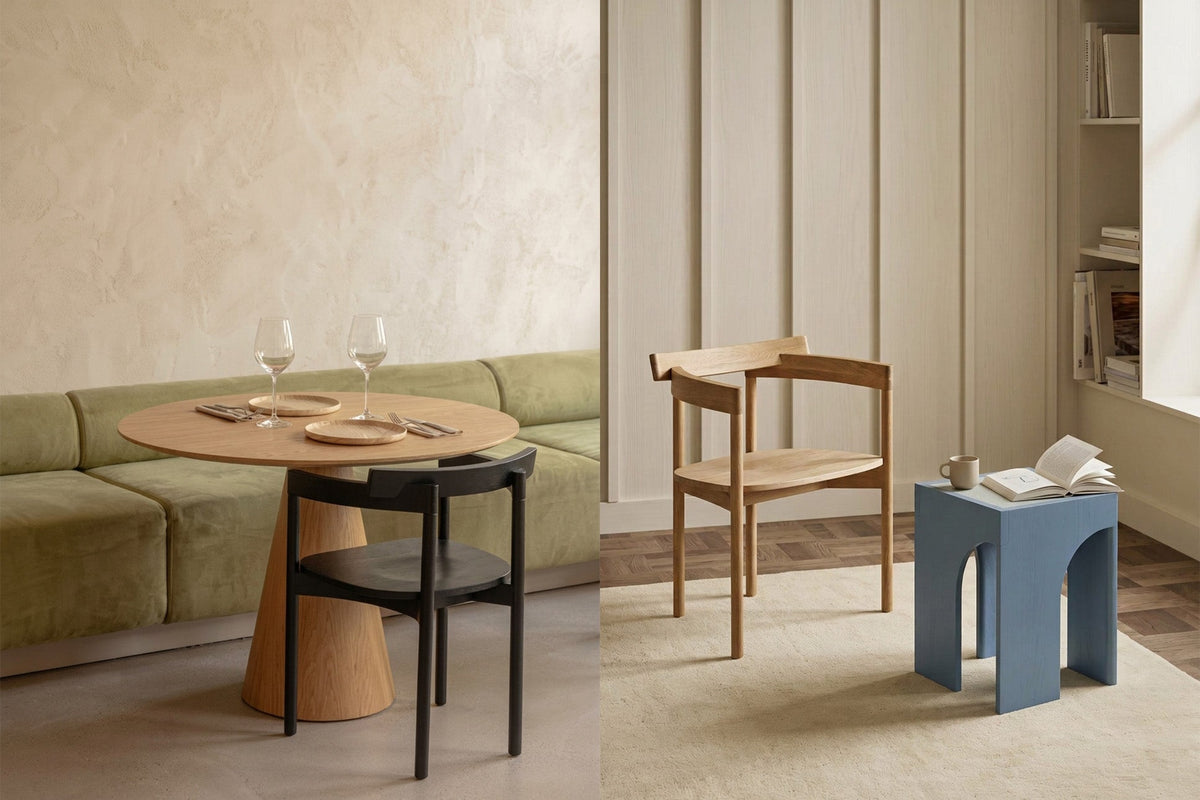
When choosing solid oak furniture, looking at the wood species alone is not enough. Which parts are made of oak, the quality of the joinery, the surface finish, dimensions, and care instructions should all be evaluated together. A good choice is one where the character of the material matches your everyday needs.
A table, chair, or bookcase can live in the same space for many years. For this reason, look beyond the form that catches your eye at first glance and consider how it is complemented by the details you interact with in daily use.
Read the material specifications part by part
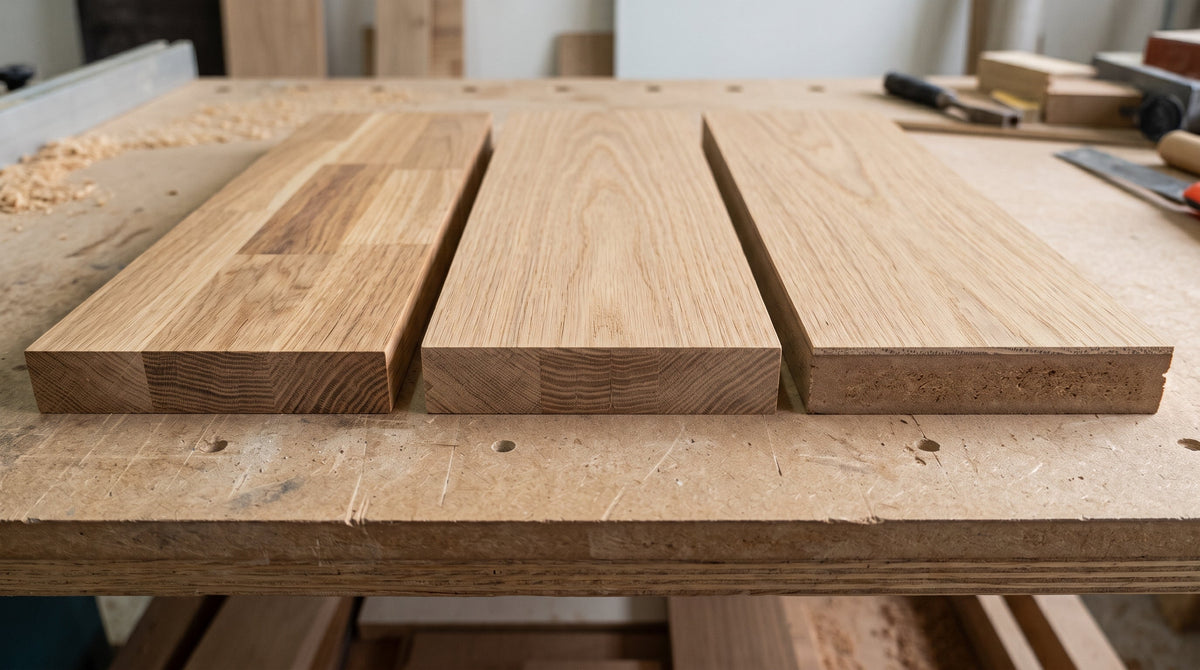
The word “oak” in a product description may not mean that every component is made of solid oak. Having material information provided separately for the top, legs, body, shelves, and doors is more informative. There are also designs where natural veneer and solid wood are thoughtfully combined within the same piece.
Wood species such as oak and beech carry distinct visual characteristics. Oak’s natural grain, along with the ray fleck patterns visible in certain cuts, can create a distinctive surface character. Furthermore, the appearance of wood varies naturally from piece to piece within the same species.
Beech is another widely used wood in furniture making. Rather than classifying a product as “high quality” or “low quality” based solely on the species name, evaluate its overall design and craftsmanship details.
Examine the details you touch
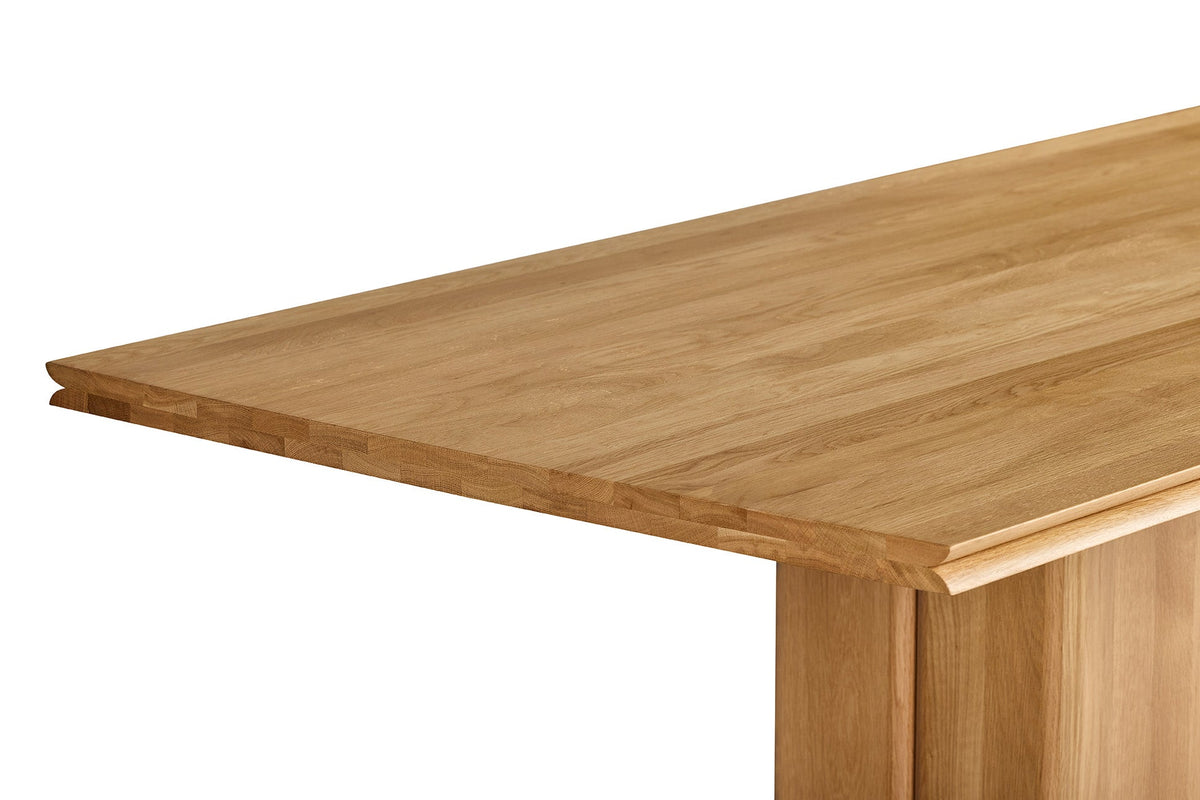
Run your hand along the edge of a table. Sit in the chair and feel the support of the backrest. Inspect the bookcase’s shelves, legs, and connection points. Much of what you will notice in daily use lies in these small details.
Where joints are visible, check for gaps, noticeable roughness, or instability that affects use. Do not assume that a heavy product is automatically better constructed. How the joinery and load-bearing elements are designed matters just as much as weight.
Learn about the surface finish
An oiled, lacquered, or painted oak surface creates different aesthetic qualities and care requirements on the exact same wood. When choosing a product’s color, find out what protective finish is applied and which cleaning methods are recommended.
Descriptions of appearance such as “natural” or “matte” are no substitute for proper care instructions. Especially for a frequently used surface such as a table, look for clear guidance regarding spills, hot cookware, and daily maintenance. Ask whether the surface can be refinished in the future and who should perform the work.
Consider dimensions in the context of use
Evaluate a table’s dimensions alongside the scale of the room. For a chair, look beyond overall height to seat height, width, and armrest level. For a bookcase, depth, wall alignment, and installation requirements are key.
If possible, experience the product in a showroom. A photograph conveys form, but the texture of the surface, seating comfort, and the true presence of the piece in a space are best understood through physical interaction.
Think about long-term use
How you can receive support throughout the product’s lifespan matters just as much as how it looks upon delivery. Care instructions, assembly details, and post-purchase customer service should all form part of your buying decision.
Related Questions
Is a thicker tabletop always better?
Thickness alone is not a sufficient measure of quality. It should be evaluated together with the load-bearing structure, overall design, and your intended use.
Can solid oak furniture have slight variations in tone?
Yes. Natural variations in color and grain pattern are inherent features across individual pieces of real wood.
Is it enough to make a decision based on photos alone?
A photograph is only a starting point. Review the dimensions, material specifications, and care instructions carefully. Trying a chair by sitting in it is especially helpful.
When evaluating Förni’s solid oak collection, consider the form, materials, and overall user experience together.