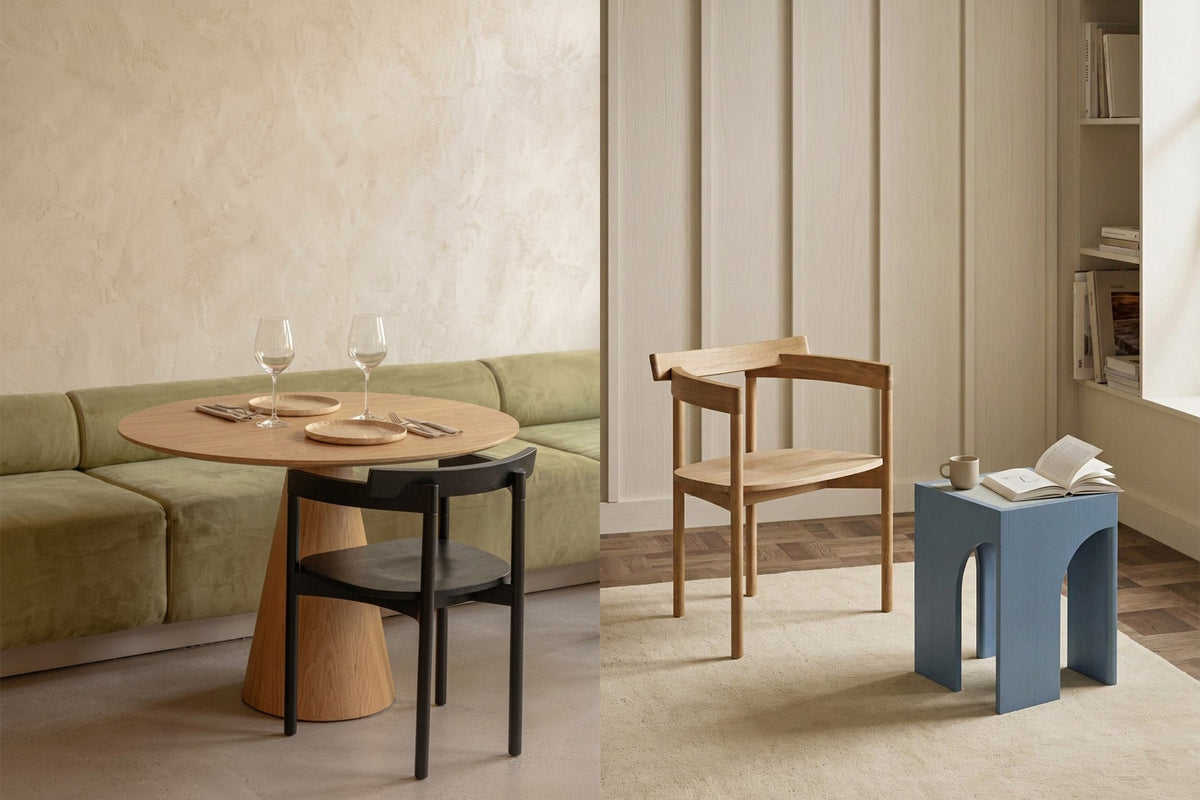
Choosing a chair starts with where and how it will be used. At home, the everyday dining setup and personal comfort come first; in restaurants, hotels, or shared spaces, usage intensity, cleaning routines, portability, and service needs also become part of the decision. The same chair should not automatically be considered suitable for every use scenario.
A chair that looks good in a photo may not deliver the experience you expect in daily use. Liking the form is the first step; evaluating seating, movement, and care conditions completes the choice.
Try it by sitting in it
Rather than sitting in the chair for just a few seconds, try it in a way that resembles your normal use. Pull up to the table, position your arms, and assess the support of the backrest. Check whether your feet rest comfortably on the floor and whether the front edge of the seat puts pressure on your legs.
Don’t judge comfort by the softness of the seat alone. The shape of the backrest, the seat depth, and the height relationship with the table also affect the experience. If possible, get feedback from users of different heights as well.
Check the fit with the table
Review the chair’s overall width, depth, seat height, and armrest height, if any. See how many chairs fit comfortably between the legs of the table you have chosen. Being able to pull up close to the table while seated matters just as much as whether the armrests fit under it.
Even when two products come from the same collection, check their fit using actual dimensions. If you are combining different chair and table options, try out the layout in addition to checking material compatibility.
Wooden or upholstered seat
When choosing between a wooden and an upholstered seat, consider how long people will sit and your cleaning habits. For an upholstered model, the fabric’s care information, whether it can be removed and replaced, and the recommended methods for stains are important.
When selecting upholstery for a commercial project, information such as abrasion resistance, colorfastness, and, where required, fire performance should be requested separately for the chosen fabric. A technical result for a fabric or surface should not be taken as proof of the same performance for the entire chair.
Questions to ask for heavy use
For a restaurant or hotel, don’t base your decision on the word “durable” alone. Find out what type of use the model is recommended for and, if test reports exist, which product and configuration they apply to. The results must match the product in the project and its conditions of use.
Will the chairs be moved during the day? Will they be dragged across the floor? Will they be stacked? If the chair is stackable, find out the stacking arrangement and capacity specified by the manufacturer. Also consider floor glides suited to the flooring and the connections that will need to be accessed during maintenance.
| Decision point | Home use | Contract use |
|---|---|---|
| Seating experience | Household members and daily habits | Different users and duration of use |
| Layout | Table fit and circulation in the room | Table fit, service, and circulation in the space |
| Cleaning | Care that can be done at home | The business’s cleaning method and frequency |
| Technical information | Dimensions and care instructions | Dimensions, care, and suitability-for-use documentation |
| Service | Maintenance support when needed | Maintenance plan and product continuity expectations |
Plan for long-term use
Before buying, find out how you can get support for maintenance and repair. Options for reupholstery, floor glides, or other parts may vary by model; discuss these from the start.
Do not assume that a chair designed for indoor use is suitable for outdoor use. The presence of wood, metal, or upholstery alone does not explain outdoor suitability. Go by the product’s specified area of use.
Related Questions
Can a chair suitable for the home also be used in a restaurant?
The model’s suitability for that use should be assessed separately. Being used at home does not on its own show that it is suitable for heavy commercial use.
Is an upholstered chair always more comfortable?
Comfort depends on the person and the design. Along with softness, also try the seating geometry and back support.
What should you ask when buying a stackable chair?
Find out the stacking capacity, the correct way to stack, and the recommended method for moving the chairs.
When choosing a Förni chair, share your area of use, your table dimensions, and any commercial project requirements with us. We can evaluate the options together based on this information.