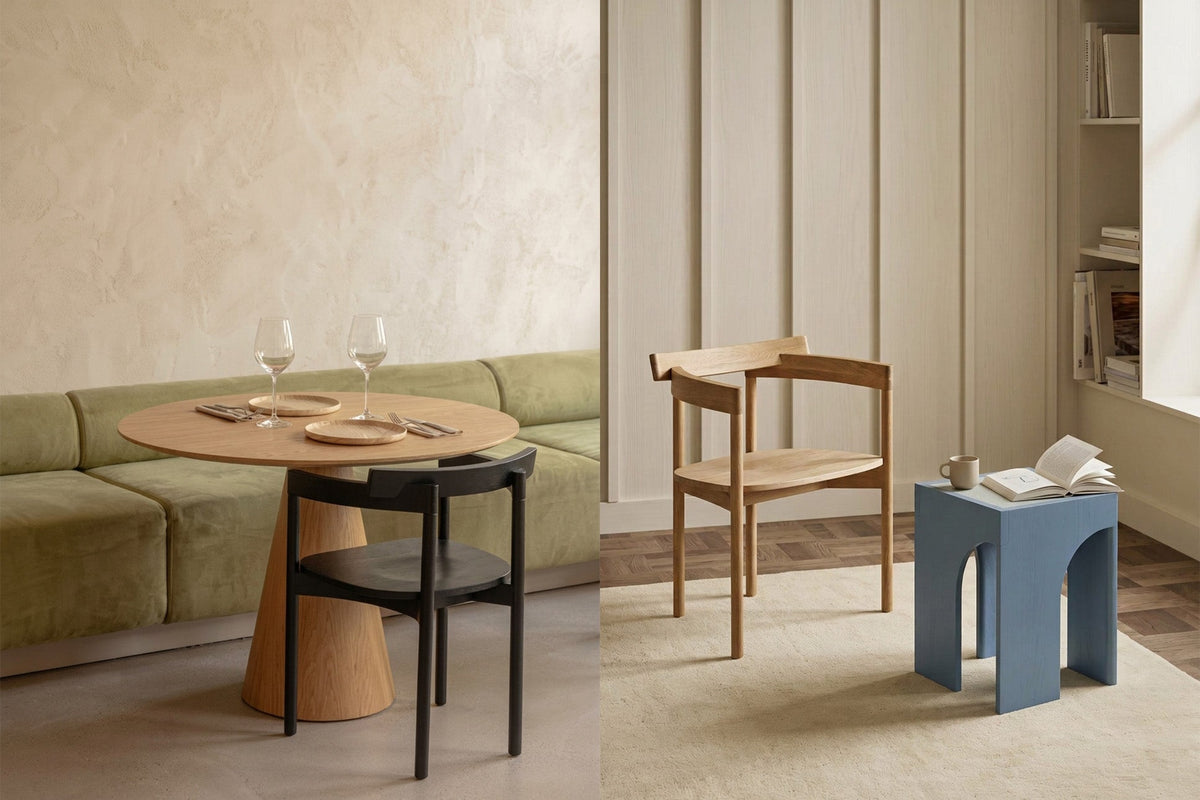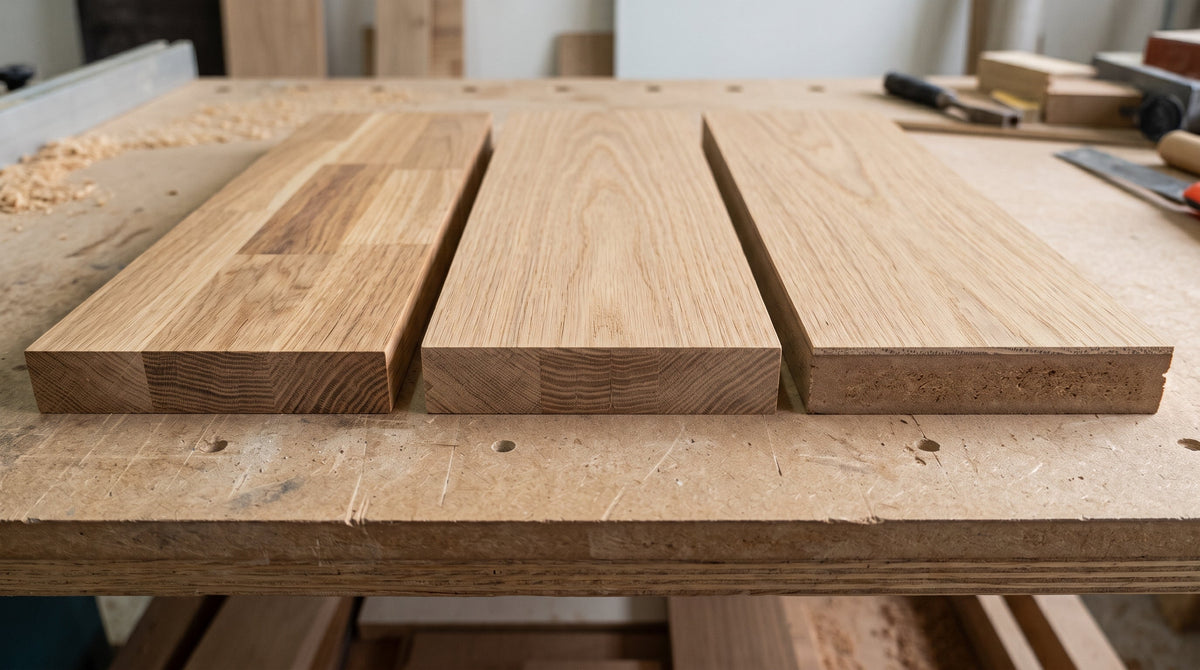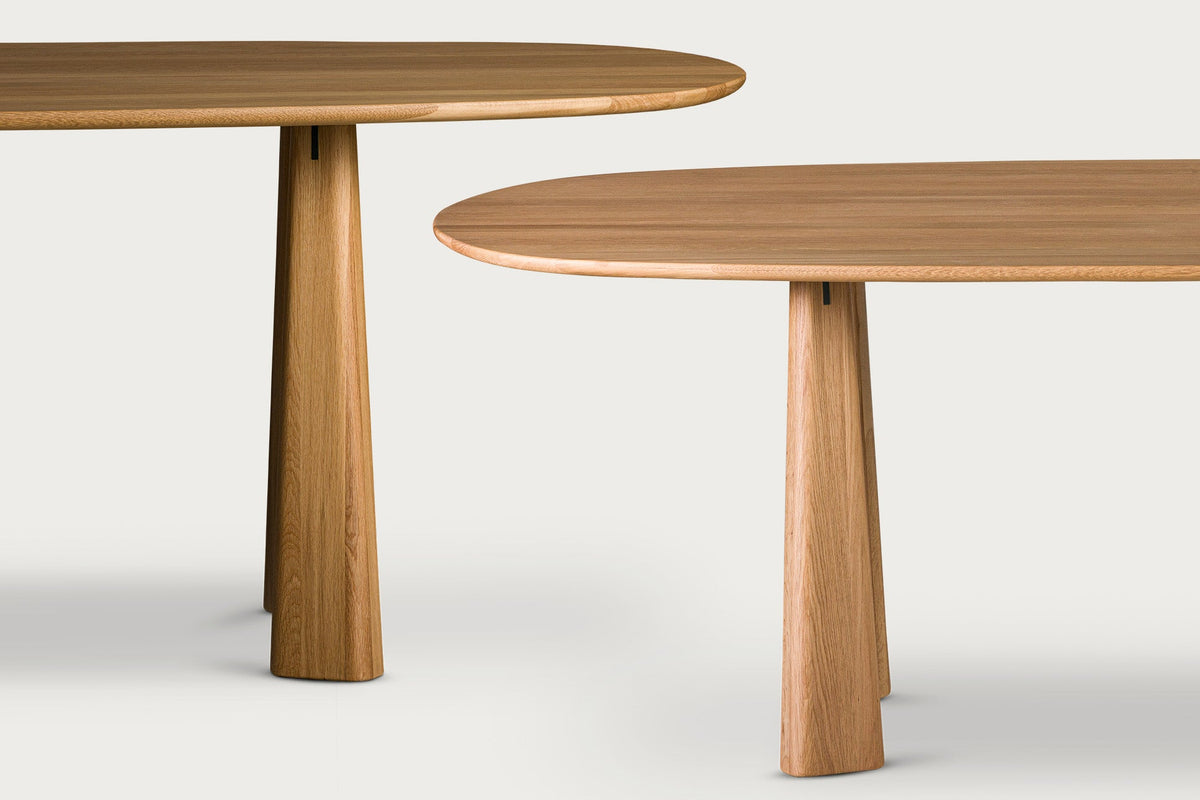
Color and texture variations in solid wood come from the natural structure of the tree. Grain and tones can vary between different trees of the same species, and even between different sections of the same tree. The cutting direction and surface finish also affect the appearance. For this reason, two wood surfaces of the same model are not expected to be identical.
Recognizing these variations when choosing wood helps you understand what to expect from a product. The grain on a tabletop does not behave like a printed pattern where every detail repeats.
How is grain formed?
The anatomical structure of wood creates the pattern seen on a cut surface. Annual growth rings and the cutting direction play a key role in whether the lines appear straighter or more wavy. In oak, ray fleck patterns running across the surface may also become prominent in certain cuts.
This is why two pieces of oak placed side by side can look different. One piece may feature calmer lines, while another may be more lively. When evaluating a product, looking at the overall harmony of the piece is more meaningful than expecting every line to be identical.
Why can color vary?
The natural color of wood becomes visible alongside the inherent characteristics of the piece and the surface finish applied. Even a clear finish can affect the appearance of wood; the word “clear” does not mean the surface will remain completely identical to raw wood.
Product photography also influences color perception. Studio lighting, screen calibration settings, and the ambient lighting in your space can cause the same surface to look different. If you are matching furniture to a specific wall or floor, seeing a physical sample is a sounder starting point.
How does wood evolve over time?
Exposure to light and everyday use affect how a wood surface looks over time. Certain tones may deepen or shift naturally. If a section of a surface remains covered for a prolonged period, a distinct tonal difference can develop between the exposed and covered areas.
For this reason, it is helpful to rotate objects resting on a table periodically and protect the furniture from intense direct sunlight. When comparing a new piece with a wood product you have owned for years, take the difference in exposure and age into account.
How do you distinguish natural variation from a product defect?
A natural variation in color or grain is not a defect that impacts product usability. Loose joinery, opening seams, significant surface damage, or structural cracks affecting safety must be assessed separately.
Similarly, wood naturally exchanges moisture with its environment, and fluctuations in humidity can cause dimensional movement. However, not every deformation should be dismissed as natural; the construction of the product and its surrounding environment must be evaluated together.
When you notice a questionable change, contact the manufacturer with photos showing the entire product and the specific detail. Seek advice from the manufacturer before attempting to fix an issue at home by sanding or applying alternative finishing products.
Related Questions
Will two chairs of the same model have the same tone?
Even if they look similar, the tone and grain pattern of natural wood pieces may not be identical.
Does a difference in grain indicate a defective product?
Not on its own. Visual characteristics should be evaluated separately from issues that affect function, durability, or safety.
Why might the delivered product look different from the color in the photo?
In addition to the wood’s natural variations, lighting conditions and screen displays also affect color perception.
With Förni’s solid wood products, appreciation for the material’s natural pattern is central to understanding the collection. When making your choice, evaluate the entire surface as a whole rather than relying solely on the color name.