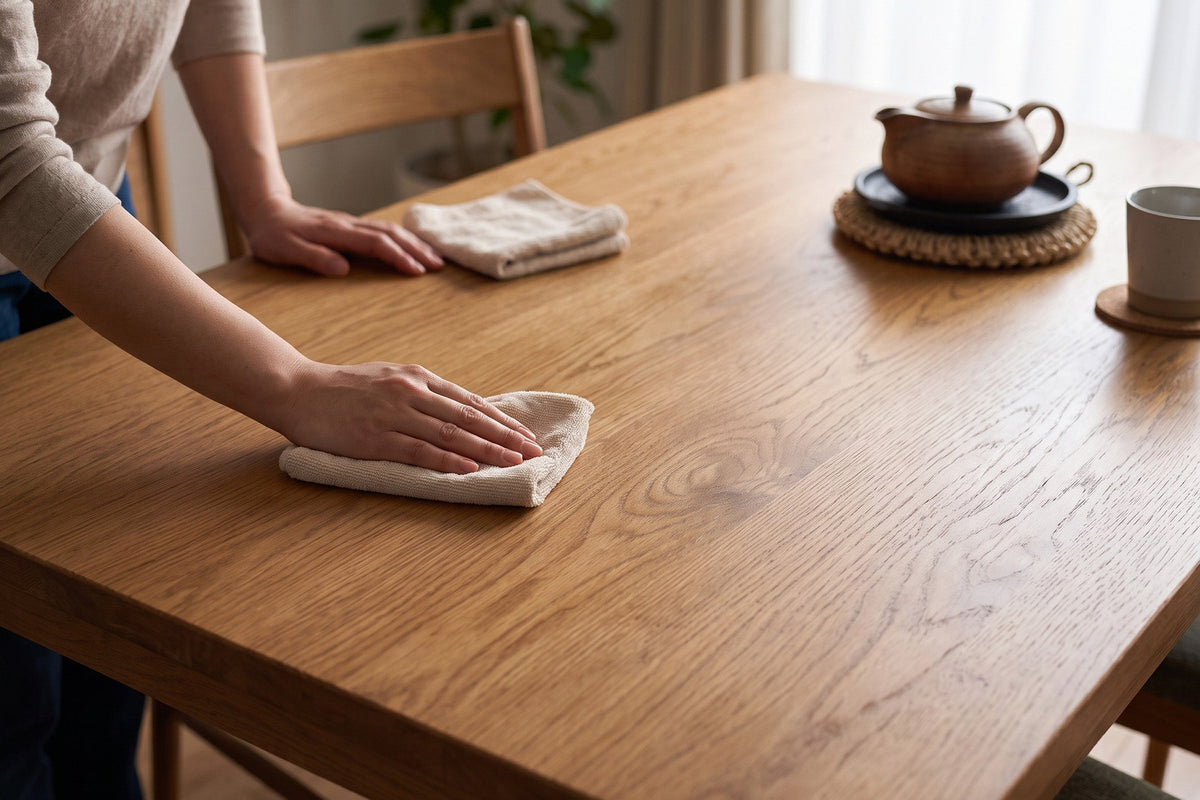
Daily cleaning of oiled wood furniture is done with a soft cloth and, when needed, a well-wrung, slightly damp cloth. Wipe up liquids without letting them sit on the surface, and dry off any remaining moisture after cleaning. When necessary, use only a cleaner recommended by the manufacturer that is compatible with the existing finish. A protective oil does not make the surface infinitely resistant to water or heat.
This guide is intended for oil-finished indoor wood surfaces. For painted, lacquered, linoleum, or upholstered pieces, please follow the specific instructions for that finish.
Daily Cleaning
First, remove dust and loose particles from the surface with a soft, clean cloth. If wiping is needed, dampen the cloth slightly and wring it out thoroughly. Do not allow water to pool on the surface. Afterward, remove any remaining moisture with a dry, soft cloth.
Instead of spraying cleaner directly onto the furniture, apply it according to the product’s usage instructions. Ensure that your cloth or cleaner contains no chemical residue from other surfaces. Using more product does not equate to better cleaning.
When Liquids Are Spilled
When tea, coffee, or any other liquid is spilled, blot it immediately with a clean, absorbent cloth. Avoid rubbing or spreading the stain over a wider area. If needed, use a surface-compatible cleaner and dry the area thoroughly. The longer a liquid sits, the higher the risk of a mark.
If a mark remains, seek support from us before turning to stronger chemicals. Household remedies recommended online, such as vinegar, baking soda, alcohol, or DIY mixtures, may not be suitable for the existing finish. Do not experiment on the stain, as this can worsen color and sheen discrepancies.
Everyday Habits to Prevent Heat Damage and Scratches
Use heat-resistant trivets under hot serving dishes and coasters for glasses. Lift metal or ceramic objects rather than dragging them across the surface. Never cut food directly on a wooden table; always use a separate cutting board.
Avoid abrasive sponges, scouring powders, and steam cleaning devices. If a scratch occurs during daily use, consult the manufacturer on proper refinishing methods before attempting to sand the surface at home.
Where to Place Your Furniture
Do not position furniture in close proximity to radiators or other intense heat sources. When placing pieces in spots that receive direct, prolonged sunlight, consider utilizing curtains or shading options.
Wood naturally exchanges moisture with its surrounding environment. Consequently, extremely dry or humid conditions, as well as sudden environmental shifts, can affect how the wood behaves, regardless of the finish. Applying oil to the surface is not a substitute for proper ambient room conditions.
When Should the Protective Finish Be Renewed?
Maintenance frequency depends on usage intensity and surface condition. Rather than applying oil on a rigid schedule for every product, follow the manufacturer’s specific guidelines. If you notice visible wear or changes in the finish, reach out with details about your product and finish type.
On tinted finishes, an incompatible maintenance product can alter the wood’s tone. Never use cooking oil, general-purpose furniture polish, or unverified maintenance oils. If refinishing is required, the correct product, application amount, and the time before the piece can be used again should be confirmed together with the manufacturer.
Related Questions
Can an oiled wood table be wiped with a wet cloth?
Instead of a wet cloth that leaves excess water behind, use a well-wrung, slightly damp cloth, followed immediately by a dry cloth.
Do I need to apply oil every month?
There is no universal monthly oiling rule. Plan maintenance according to your product’s guidelines and the actual condition of the surface.
What should be the first step if a stain remains?
Check your product’s finish specifications and request customer support with a clear photo while the mark is visible. Avoid using unverified chemicals or sandpaper.
When caring for your Förni piece, always rely on the specific instructions provided with your product. If refinishing or stain treatment becomes necessary, contact us before applying any treatment.